
International students can study at recognised U.S. universities with the USA Student Visa, primarily the F-1 visa. It encourages enrollment in language classes, additionally , vocational training, and full-time academic programs. In addition to opportunities for on-the-job training after graduation, students can work full-time during official breaks and part-time on campus. Students who wish to apply must demonstrate their financial stability, provide proof of admission, and indicate their intention to return home after completing their studies. They can travel with dependents on an F-2 visa. Completing the DS-160 form, paying the required fees, and attending an interview at a U.S. embassy or consulate are all essential steps in the application process. This visa provides access to top-notch cultural events and education in the United States.
__________________________________________________________________________
USA Student Visa: Requirements and Application Process for International Students
Visa Application | studying abroad | Benefits of studying in USA
Every year, thousands of international students aspire to study in USA. Obtaining a student visa is a prerequisite for studying there. This guide provides a thorough rundown of the USA student visa application process, covering eligibility requirements, various visa categories, and helpful advice to ensure a seamless start to your academic voyage.
What is a USA Student Visa?
The U.S. government formally authorises foreign students to enter the country for educational purposes through the issuance of a USA student visa consultants. It attests to the holder’s ability to enrol in accredited academic or vocational programs, such as high schools, colleges, universities, or technical schools.
There are two main categories of student visas for the United States:
- Students enrolled in technical, vocational, or non-academic training programs are eligible for the M-1 Visa (Vocational Student Visa).
Why International Students Choose the USA
Every year, thousands of international students are drawn to the US by its many benefits:
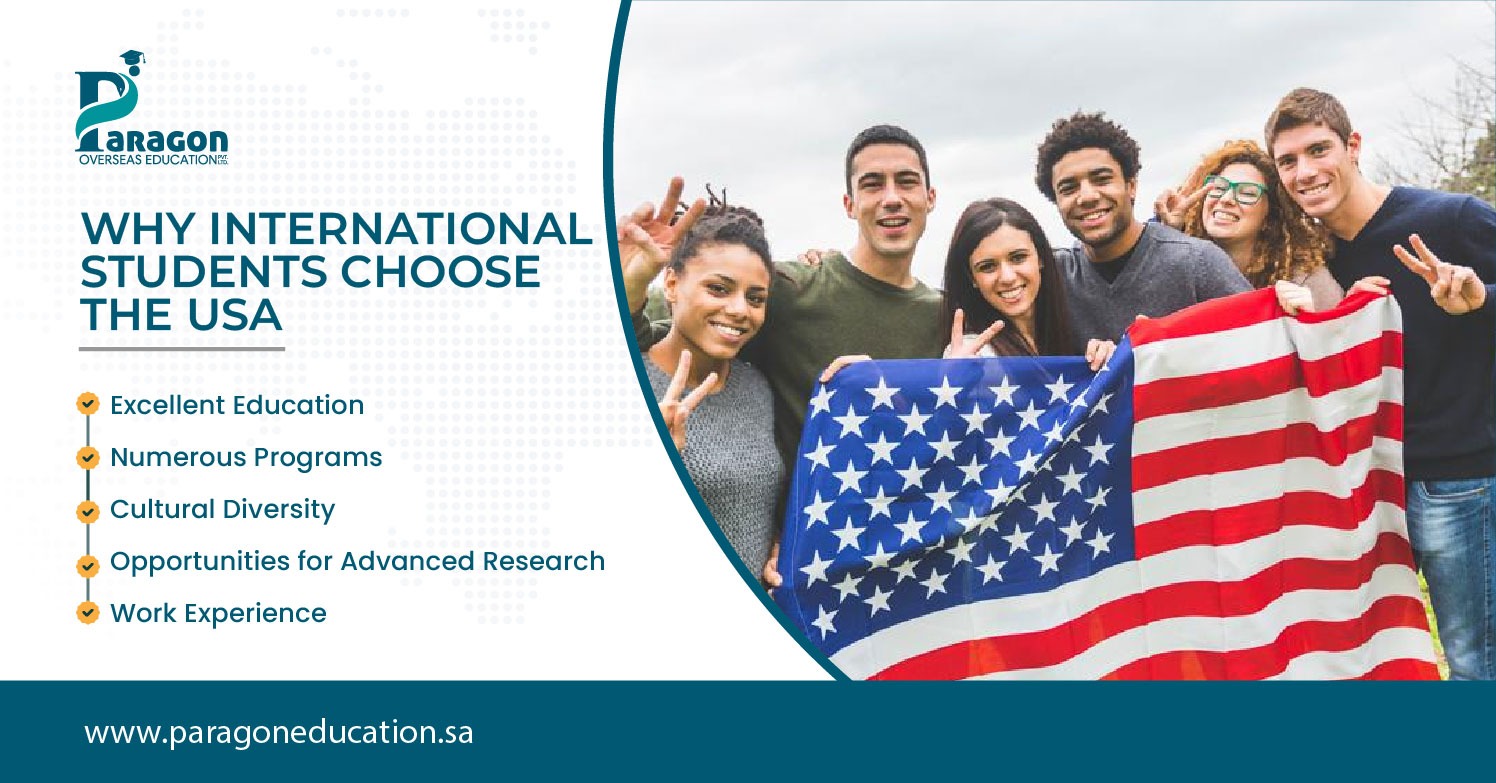
- Excellent Education: There are numerous internationally renowned universities in the United States that provide top-notch academic programs.
- Numerous Programs: Engineering, business, medicine, technology, and the arts are just a few of the many fields from which students can choose.
- Cultural Diversity: Learning in the United States exposes students to a variety of multicultural settings and international viewpoints.
- Opportunities for Advanced Research: Universities provide top-notch research facilities as well as hands-on learning opportunities.
USA Student Visa Types

Academic Student Visa (F-1)
The most popular visa for foreign students studying in the US is the F-1. It makes it possible to enroll in high schools, colleges, universities, language courses, overseas education consultants, and other educational establishments.
Essential Elements of the F-1 Visa:
- Valid for the duration of the course of study.
- Permits up to 20 hours of part-time on-campus work per week throughout the academic year.
- Provides up to a year of work experience following graduation through Optional Practical Training (OPT).
Vocational Student Visa, or M-1 Visa
Students who want to enrol in technical, vocational, or non-academic programs—like trade schools or specialised training courses—are eligible for the M-1 visa.
Essential Elements of the M-1 Visa:
- Designed especially for technical and vocational programs.
- There aren’t many work options, and they usually have to be closely tied to the course of study.
Exchange Visitor Visa, or J-1 Visa
The J-1 visa is intended for people taking part in exchange programs, internships,study abroad programs or cultural exchange initiatives in the United States, though it is not solely a student visa.
Important J-1 Visa Features:
- Relevant to professional exchange programs, high school, and college.
- After completing some programs, participants must stay in their home country for two years.
Requirements for an American Student Visa
The following conditions must be met by applicants for a U.S. student visa:
- Admission to a SEVP-Approved School: You need to be accepted by a school that has earned SEVP (Student and Exchange Visitor Program) certification.
- Proof of Financial Support: You must demonstrate that you have enough money to pay for living expenses, tuition, Global Visa Consultants, and other costs while you are in the United States.
- Strong Home Country Ties: Your family, property, or professional ties must persuade visa officers that you plan to return home after completing your studies.
- English Proficiency: The majority of universities demand evidence of proficiency in the language through exams like the TOEFL or IELTS.
- Good Character and Health: Candidates may require a medical examination and should be in good health.STE
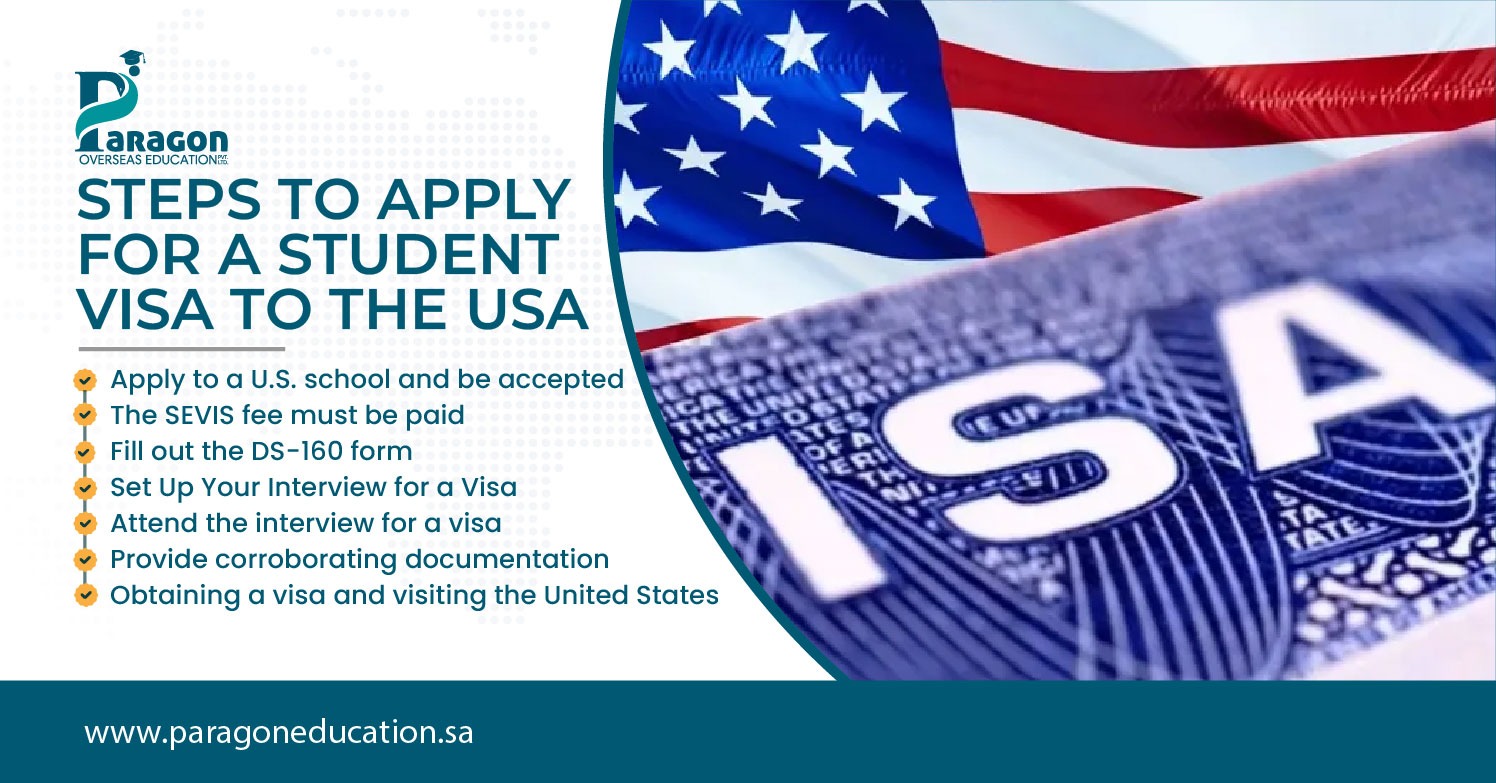
Steps to Apply for a Student Visa to the USA
Steps to obtain a USA student visa include enrolling in a school that has been approved by SEVP, as detailed below.
-
Apply to a U.S. school and be accepted
Your enrollment, program information, and eligibility to study abroad consultants in the US are confirmed by this form.
-
The SEVIS fee must be paid
The system that keeps tabs on foreign students during their time in the US is supported by this fee.
- $350 for an F-1 visa
- $350 for an M-1 visa
- Visa J-1: $220
-
Fill out the DS-160 form
The official online application for all non-immigrant visas to the United States, including student visas, is the DS-160. Candidates must submit accurate financial information, while educational records, study abroad office. Verifying all information is essential because errors or omitted information may result in delays or the denial of a visa.
-
Set Up Your Interview for a Visa
You need to make an appointment for a visa interview at the closest American embassy or consulate after submitting your DS-160 form. To guarantee a successful interview, make sure you have all the required paperwork, including your passport, Form I-20, SEVIS fee receipt,USA student visa fees and financial documentation.
-
Attend the interview for a visa
Typical topics include your academic program and university preference, your ability to pay for living expenses and tuition, your post-graduation career advice, and your ties to your homeland. Give a truthful and assured response, backed up by evidence to bolster your argument and show that you intend to return home once your studies are over.
Provide corroborating documentation
Usually, these consist of:
- Your U.S. institution’s Form I-20
- A passport that is still valid for at least six months after the planned stay
- Confirmation page for DS-160
- Payment receipt for the SEVIS fee
- Financial documentation like bank statements, letters of scholarship, or proof of sponsorship
- Transcripts, while , degrees, and results from standardised tests are examples of academic records.
- Evidence of close ties to your nation of origin, such as family, real estate, or professional obligations
-
Obtaining a Visa and Visiting The United States
You may enter the United States up to 30 days before the start of your academic program. Additionally, include copies of your financial records, admission letter, and SEVIS receipt in your hand luggage for convenient entry.
Typical Obstacles to Obtaining a Student Visa for the USA
while, It can be competitive to obtain a U.S. student visa requirement, and applicants frequently encounter obstacles that could compromise their approval. Understanding these concerns can aid in your efficient preparation:
- Inadequate Financial Evidence: Refusal may occur if there is insufficient money to pay for living expenses and tuition.
- Absence of Strong Ties to Home Country: You must persuade visa officers that you plan to return once your studies are over.
How to Improve Your Chances of Getting a USA Student Visa
It takes careful planning to obtain a student visa to the United States. The following advice will increase your chances of being accepted:
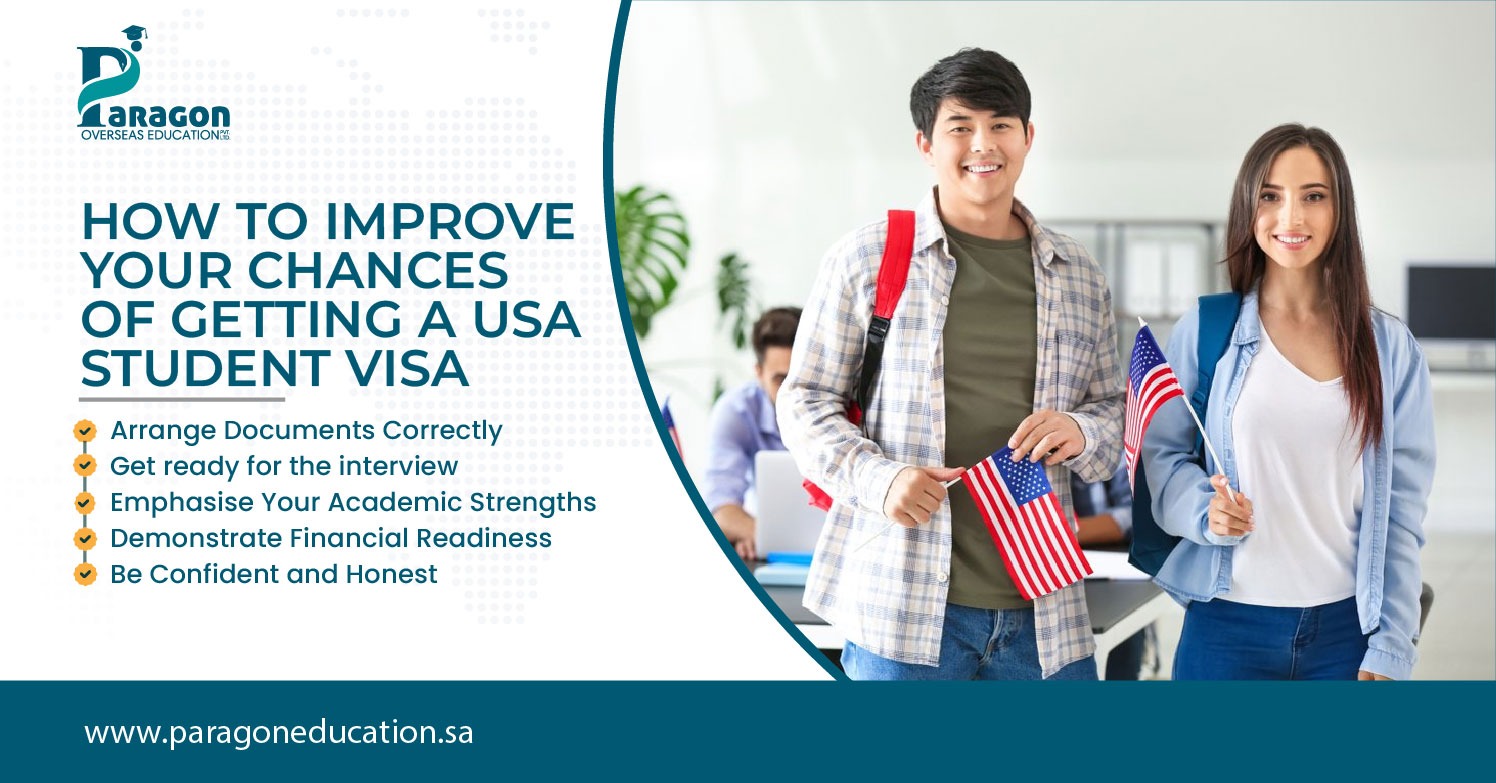
- Arrange Documents Correctly: Verify that all financial statements, supporting letters, and forms are correct and comprehensive.
- Get ready for the interview: Develop your ability to clearly and confidently respond to enquiries regarding your selected program, university, and career objectives.
- Emphasise Your Academic Strengths: Academic accomplishments, high test scores, and good grades show that you take your studies seriously.
- Demonstrate Financial Readiness: Clearly demonstrate that you have the money, additionally scholarships, or sponsorship necessary to pay for your expenses.
- Be Confident and Honest: Never give a false response because it may result in rejection or permanent ineligibility.
Advice for an Effective Study Trip to the United States
It takes planning and balance to make the most of your time in the US as an international scholarship. The following advice will help you succeed:
- Remain organised by keeping track of academic due dates, travel requirements, and important visa documents.
- Preserve Your Legal Status by Adhering to All Visa Regulations, Such as Those Of Work Limitations and Course Enrollment Requirements.
- Handle Money Sensibly: Create a budget to cover daily expenses, emergencies, housing, and tuition.
- Create Your Career Path: To obtain important work experience, take advantage of OPT, internships, and research opportunities.
Opportunities of Study Abroad Expatriates in Saudi Arabia
With numerous universities and organisations providing pathways for international study, while , expatriates saudi arabia have excellent opportunities to pursue higher education overseas. International students in USA can look into exchange programs, additionally, scholarships, and specialised courses that fit their professional objectives. In addition to offering top-notch instruction, these opportunities also improve career opportunities, global networking, and cultural exposure, which makes studying abroad a desirable option for expatriates.
Your Trusted Source for a Successful Study Abroad Experience: Paragon Education
At Paragon Education, we give students the knowledge and resources they need to realise their dreams of studying abroad. ParagonEducation is your dependable guide on the path to top-notch education, with an emphasis on accuracy and student achievement. About Us: Through professional visa advice, admissions assistance, and reliable resources, ParagonEducation specialises in helping students pursue their goals of studying abroad with confidence. Our services: We guide students with university selection, visa applications, scholarships, career counseling, and pre-departure support for successful international education.
Conclusion
Getting a USA student visa is the first step towards accessing top-notch instruction, while international exposure, and countless growth prospects. Students can make the most of their U.S. educational experience and use it as a solid basis for a prosperous future anywhere in the world if they remain dedicated to their objectives and adhere to visa regulations. Contact Us: We are here to help you achieve your study abroad goals, so get in touch with our team right now for expert guidance on the paperwork, interview strategies, and USA student visa process.
FAQS
Which are the primary categories of student visas for the United States?
F-1 and J-1 for exchange visitor programs are the three main categories of student visas that the US offers. The F-1 visa is the most frequently granted of these, particularly to students who are enrolling in colleges and universities around the nation.
How Can I Find Out Whether My School Has SEVP Approval?
To issue the Form I-20, which is necessary to obtain a U.S. student visa, a school must be SEVP-certified.
Can I Use an F-1 Visa to Work While I'm a Student?
Yes, under specific circumstances, holders of an F-1 visa are allowed to work. Students may work up to 20 hours a week on campus during the academic year, and full-time during breaks or holidays. .