
UStudents need to consider different language proficiency levels when seeking an international education. They can gain better experience, make new connections, and understand the foreign country’s culture and environment. All this is possible with the right communication skills. They can get better scholarships, financial aid, and similar opportunities when study officials see their proficiency levels. But choosing the right test formats and fulfilling requirements is necessary with professional assistance.
4 Key Language Proficiency Levels Explained for Study Abroad Journey
PTE Test | TOEFL Score | IELTS Preparation
Studying abroad is a vast experience for students throughout the world. They can enhance their experience, contacts, academic, and professional growth. Language proficiency levels are essential elements that simplify their international education journeys.
They can gain admission into top universities in varying study destinations and ensure a smooth transition for their international education. Students can open up to a whole new world and environment when they have the required English language skills. But they need proper assistance from study consultants.
What Are The Different Levels Of Language Proficient?
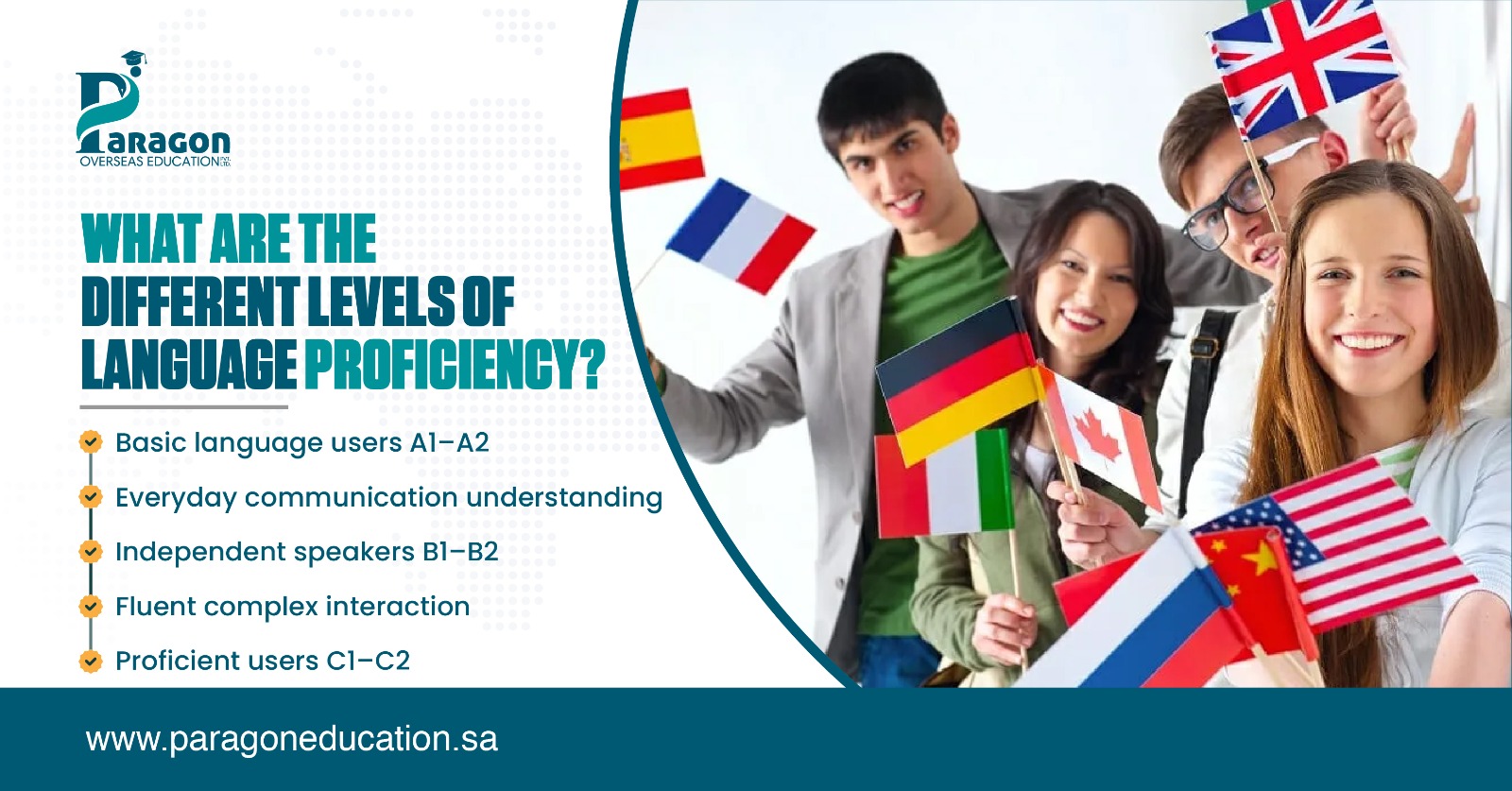
The Common European Framework of Reference for Languages (CEFR) divides the language proficiency levels into 6 main categories.
Basic English Speakers
This level involves beginner and elementary-level English speakers, such as the following.
A1 English Level
Through these language proficiency levels, users can understand basic daily use phrases and expressions. Users can introduce themselves and others and ask others similar questions. They can share personal details about where they live or about the things they have. Moreover, they can interact properly when the other person is talking slowly and wants to help them improve their communication skills.
A2 English Level
These users can understand normal sentences and frequently used expressions related to daily life. They can communicate with others and complete the required tasks by sharing information and understanding their duties. They can also describe things in their backgrounds, environments, and areas that need quick attention.
Independent English Speakers
A global visa consultancy helps students ensure they are well prepared for this type of English. They have to complete the following levels of English.
B1 Level English
This intermediate English level allows users to clearly understand the different points on various matters like work, university, and entertainment. Also, they can speak with others confidently while travelling and can produce simple texts on different topics. Whether they are familiar with or have interests in. Moreover, they can also give reasons and explanations on different topics with better suggestions.
B2 Level English
This upper-intermediate English level enables users to comprehend the main idea of complex texts. Related to both concrete and abstract topics. They can interact fluently with native speakers, which makes regular interactions easy. They can also produce detailed texts on varying topics and subjects, along with advantages and disadvantages.
Proficient English Speakers
Study visa consultants help students enhance their communication skills through advanced English learning.
C1 Level English
This advanced English level enables users to comprehend long texts with complex and demanding meanings. They can express themselves fluently by understanding different expressions and can use the language for social, academic, and professional purposes. They can show controlled choice of learning with detailed and well-structured texts.
C2 Level English
This mastery-level English allows users to understand virtually everything they read or hear. They can summarise information from written and spoken formats, conduct arguments, and prepare structured presentations. They can fluently express themselves in varying situations with an informed vocabulary.
Popular English Language Proficiency Test Options
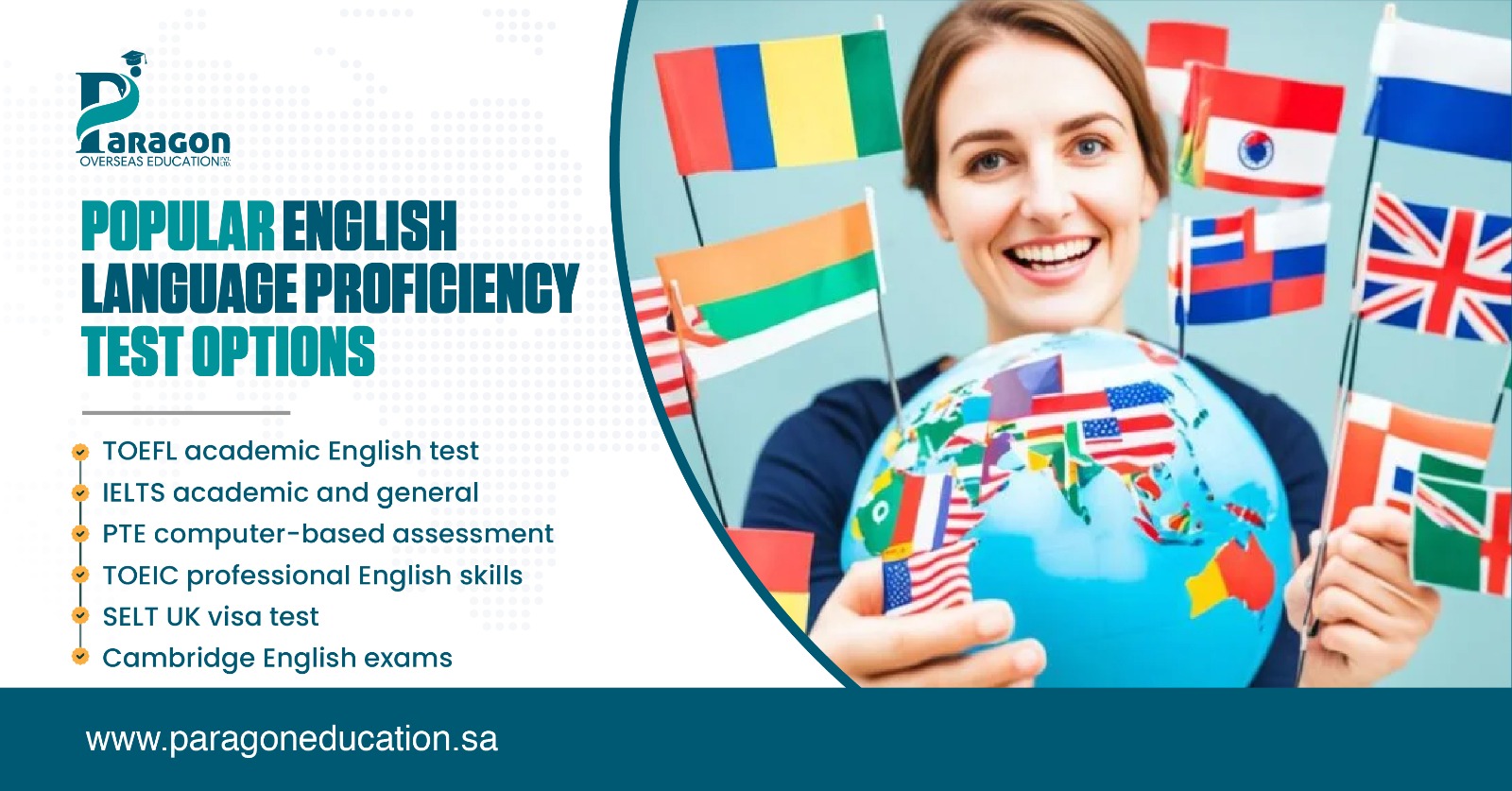
Although learning about the 4 levels of language proficiency is vital for students interested in studying abroad. They need to stay informed about different tests for language proficiency levels. They can choose suitable tests according to their required admission demands from the officials.
Test Of English As A Foreign Language (TOEFL)
It’s a popular test to measure your ability to utilize and understand English in an academic setting. It usually proves necessary for students applying to the USA and Canada destinations. The International Based Test (IBT) from the TOEFL is the common format. To examine students’ reading, writing, listening, and speaking abilities through multiple tasks that reflect real-world academic experiences. In some locations, paper-based versions of the tests are also available.
International English Language Testing System (IELTS)
Through the specific IELTS score for varying study programs in different destinations. The officials examine the English proficiency levels of individuals interested in studying and working abroad. This test is accepted in the UK, Australia, New Zealand, and other countries.
There are two formats available in IELTS: General and Academic Training. The Academic version is suitable for those individuals applying to universities for study purposes. The General version is beneficial for those who want to migrate to an English-speaking country. For work and other purposes. Through both formats, these tests examine your reading, writing, listening, and speaking skills.
Pearson Test Of English (PTE)
The PTE Academic test is a computer-based test to measure your English skills for academic purposes. It’s an alternative option for IELTS and TOEFL. It is widely used in the UK, Australia, and many other countries’ universities. PTE test uses real-life materials, including lectures and conversations in an integrated format. This test helps assess your reading, writing, listening, and speaking abilities.
Test Of English For International Communication (TOEIC)
This test helps examine your ability to understand and use English in professional environments. Although it’s not generally required for university admissions. TOEIC proves a beneficial test for students who want to pursue careers in international businesses and organizations that speak English. It’s available in Listening and Reading or Speaking and Writing parts. It depends on your specific interests whether you want to take the single or both parts of the test.
Secure English Language Test (SELT)
This is a specific English proficiency test used for visa and immigration purposes in the United Kingdom. Expatriates in Saudi Arabia can also benefit from this test for their specific study or work purposes. You can take an SELT test if you’re applying for a UK student visa and English is not your first language.
Every university has its unique format and score requirements for this test. You need to check the UK visa requirements for the particular visa category you’re applying for. It will help you find suitable score requirements for the SELT test.
Cambridge English Exams
Cambridge English provides multiple exams to test students’ English proficiency level. They involve:
- Cambridge English: First (FCE).
- Advanced (CAE).
- Proficiency (CPE).
These are famously accepted tests throughout the world and in different countries’ universities for varying study requirements.
Why Do Language Proficiency Levels Matter?
When students use the services of professional overseas education consultants like Paragon, they can improve their language proficiency levels. But understanding the importance of these proficiency levels is beneficial for choosing tests according to your specific study preferences.
Language Proficiency Levels: Admission Requirements Of The Universities
Language proficiency levels are necessary for students to get admission to universities. Where the teaching language is not their native language. Universities set a condition that students can get admission. When they have the skills to speak and understand the specific language, they can complete the course.
Otherwise, they will find it difficult to understand the assignments, tests, and lectures, and cannot equally participate in discussions. As a part of the admission criteria, most universities set a minimum score requirement on these tests.
Language Proficiency Levels: Academic Proficiency
Language proficiency levels are preferred in a foreign country or university because academic success relies on this criterion. Students can understand complicated discussions, take tests, write compelling essays, and engage in different activities with other students. Students become properly prepared to handle all types of casualties and academic stress when they have language proficiency skills. They can communicate effectively and improve their overall academic performance.
Language Proficiency Levels: Forming Academic Relationships
Language proficiency levels are also required to form good relations with the academic community of the university. Students with better proficiency levels in languages can connect easily with relevant students and teachers, and simplify their group discussions. Students can form a supportive network in a foreign country while improving their studying abroad experience. With better learning opportunities, memberships, and counselling.
It’s an experience which affects the daily life of students when they live in a new culture. It’s not limited to academics. Students need language proficiency to ask for directions, shop, interact with the natives, etc. They can feel confident when they are learning about their host country while expressing themselves properly.
Language Proficiency Levels: Improved Confidence
Having good scores on the language proficiency tests helps boost students’ morale and confidence. It helps them provide better performance for their academic and social interactions. They can handle different types of challenges efficiently. Their living and studying in a foreign country becomes manageable.
Language Proficiency Levels: Career Opportunities
Students can get better post-graduation employment opportunities when their language proficiency levels are high. Moreover, they can work in the host country after completing their studies. Employers need candidates who are proficient in the local language for effective communication at the workplace. That’s why these proficiency levels are beneficial for improving students’ credibility for post-graduation employment opportunities.
Language Proficiency Levels: Scholarships And Improved Communication Skills
Students need language proficiency levels to approve their scholarships, funding, and other similar expenses. Scholarships are highly competitive, and having high proficiency levels can help students stand out.
Your commitment and dedication to studying abroad are reflected in your proficiency levels. You can get financial aid through this factor. These proficiency levels are also necessary for effective communication in both professional and personal contexts, beyond academic purposes.
Language Proficiency Levels: Personal Development
Preparing and taking language proficiency tests proves to be a complicated procedure for many students. Further, they need to commit time, dedication, and perseverance. These qualities prove beneficial for improved academic, personal, and professional growth. Students can improve their overall language skills, which proves effective for their entire lifestyle. They can also enhance their ability to commit.
What Is The English Language Proficiency Requirement?

There are different types of English language proficiency requirements for varying students according to their selected study destinations. They need to get standardized scores on specific tests, like:
- TOEFL (80-100 IBT).
- IELTS (6.5-7.0 overall).
- Duolingo.
- PTE.
- Cambridge English Exams.
- These requirements are set by the university’s officials, immigration bodies, and international employers. To ensure that applicants applying for different programs can speak and understand English-based studies and work.
- Students can provide better evidence with their previous educational transcripts. Moreover, they can showcase their English language proficiency certificate, where they have studied English as a primary language.
- Otherwise, exemptions can also be available if you can meet certain eligibility criteria of an English-speaking country.
- Students need to check out the specific criteria, requirements, and minimum score in each skill. Instead of considering the overall score and other requirements.
Study Abroad Consultants – Paragon Overseas Education

An English language learning course is a special requirement for various language proficiency levels in international education.
- At Paragon Education, we offer online test materials and YouTube lectures to students to improve their overall study experience.
- Students can improve their language proficiency levels, get approved by their selected study destinations, and ensure a smooth transition abroad. When they have our consultants’ assistance.
- Our study consultants use advanced tactics and consider individual profiles of all students. To ensure they can help students choose better options accordingly.
- We are here to simplify your international education experience with the right guidance and to fulfill the new requirements.
Conclusion
To conclude, language proficiency levels are required for students interested in international education. Further, they can easily apply for graduation and post-graduation study programs when they have proper speaking skills. Knowing the host country’s language for studies, interaction, and work purposes allows students to simplify their overall experience. But having proper assistance from the study consultants is necessary, so contact us today! Make your journey adventurous with better support.
FAQs
According to the common ACTFL (American Council on the Teaching of Foreign Languages). Novice, Intermediate, Advanced, Superior, and Distinguished are the 5 levels of language proficiency. The first three levels are further divided into sub-categories.
They are the levels of the Common European Framework of Reference for Languages (CEFR). They categorize language proficiency from beginner (A1) to mastery (C2). A=Beginner, B=Intermediate, C=Advanced. They describe the ability to use language proficiency from basic to complicated ideas fluently for different purposes.
The most common language levels in the CEFR are A1-Breakthrough, A2-Waystage, B1- B1-Threshold, B2-Vantage, C1-Advanced, and C2-Mastery. C2 is the highest level users can achieve on the CEFR scale. What are the 5 levels of language proficiency?
What are language levels A1, A2, B1, B2, C1, and C2?
What are the 7 language levels?